Step 1: Choose Your Guitar Type
Before diving into brands and models, it helps to understand the three main families of guitar.
Acoustic Guitars
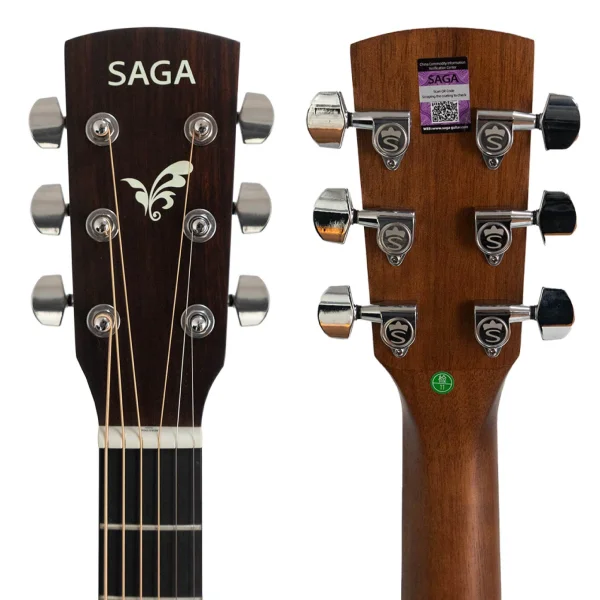
Acoustic guitars produce sound naturally through their hollow body, without needing an amplifier. They’re the most versatile starting point for beginners and a staple for singer-songwriters, folk, country and campfire players alike.
- Best for: Beginners, songwriters, unplugged playing
- Look for: Solid wood tops (better tone as they age) vs. laminate tops (more affordable, more durable)
- Bonus: Many acoustic models are also available as electro-acoustics, with built-in pickups so you can plug into an amp or PA when needed
Electric Guitars
Electric guitars use magnetic pickups to convert string vibration into a signal, which is then shaped and amplified through an amp or pedals. They’re lighter on the fingers (thinner strings, lower action) and open the door to rock, blues, metal, jazz and beyond.
- Best for: Players who want tone flexibility, effects, and genres beyond acoustic music
- Requires: An amplifier and a cable (or wireless system) to be heard properly
- Look for: Body style, pickup type (single-coil vs. humbucker), and neck profile that suits your hand size
Bass Guitars
The bass guitar holds down the low end and the rhythm section of a band. It has four (or more) thicker strings tuned an octave below a guitar’s lowest strings.
- Best for: Players drawn to rhythm, groove and low-end tone
- Requires: A bass amp (standard guitar amps aren’t designed for bass frequencies)
- Look for: 4-string vs. 5-string options, scale length, and passive vs. active electronics
Step 2: Get Familiar With Common Guitar Shapes & Styles
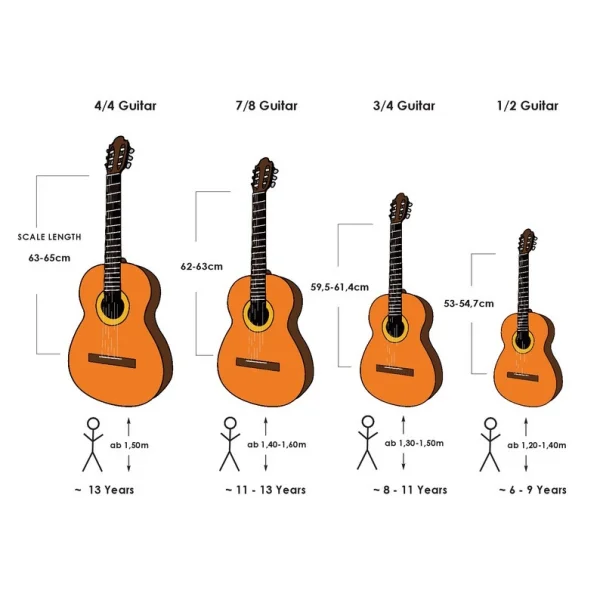
Within each guitar type, body shape affects tone, comfort and volume:
| Type |
Common Styles |
Good to Know |
| Acoustic |
Dreadnought, Grand Performance / Auditorium,
Orchestra (OM), Parlour, Travel/Mini |
Dreadnought = louder, fuller bottom end;
smaller bodies = more comfortable, focused midrange |
| Classical / Nylon-String |
Traditional classical, crossover/thinline classical |
Wider neck, nylon strings – softer on fingers,
popular for fingerstyle and Spanish/flamenco styles |
| Electric |
Solid-body, Semi-hollow, Hollow-body |
Solid-body = versatile and feedback-resistant;
hollow/semi-hollow = warmer, more resonant,
favoured in jazz and blues |
| Bass |
4-string, 5-string, Short-scale |
Short-scale basses are easier for smaller hands or players transitioning from guitar |
Step 3: Things to Consider Before You Buy
- Skill level – Beginner-friendly guitars prioritise comfort and easy playability over premium tonewoods.
- Budget – Decide on a realistic range first; there are excellent instruments at every price point.
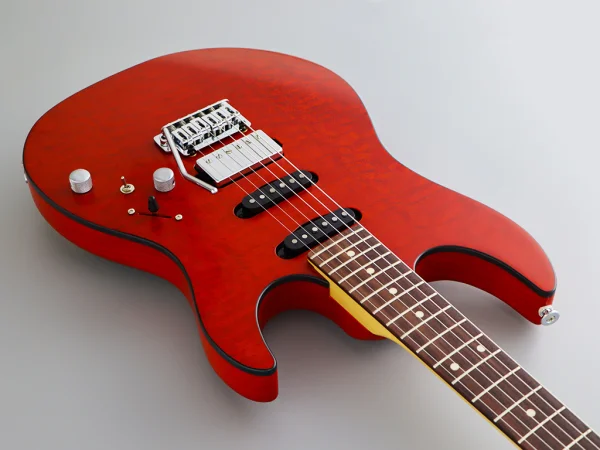
- Body size and scale length – Comfort matters more than looks. If possible, try before you buy.
- Tonewood – Different woods (spruce, mahogany, rosewood, sapele) shape the tonal character of acoustic and classical guitars.
- Electronics – If you plan to gig or record, look for models with built-in pickups/preamps.
- Strings – The right string gauge and material (phosphor bronze, 80/20 bronze, nickel, nylon) can transform how a guitar feels and sounds.
- Accessories – A proper case, tuner, capo and strap round out a complete setup.